Emotional Healing Through Tantra Yoga: Real Stories from Skeptics and a Practical Guide
11 December Dec 2025
In a world filled with ever-changing wellness trends, finding genuine emotional healing can feel elusive. Emotional healing is the process of addressing and resolving feelings like stress, anxiety, depression, and burnout that can weigh us down and block our sense of well-being.
Tantra Yoga is one system that takes a practical, logical approach to this process. It offers time-tested techniques for releasing emotional pain and restoring inner balance.
Far more than a path to physical intimacy, Tantra Yoga is a holistic philosophy that works on all levels: physical, emotional, mental, and spiritual. Developed by yogic masters over thousands of years, it uses specific practices to help individuals process challenging feelings and nurture emotional balance.
Meet Dorothea, a programmer, and Yan, an engineer — two students seeking answers, not miracles. They didn’t come to Tantra Yoga chasing mystical experiences; they came yearning for real change.
Their stories show that this ancient practice is about much more than belief. Tantra Yoga offers a sound, effective approach to true emotional healing that stands up to even the most rational scrutiny.
In this article you will find:
- From desperation to healing: Dorothea’s story
- When logic alone isn’t enough: Yan’s story
- The skeptic’s guide to exploring Tantra Yoga
- Top 3 yoga poses for emotional healing (practical guide)
From Desperation to Healing: Dorothea’s Story

Dorothea, a 35-year-old programmer and project manager from Sweden, had always dismissed spirituality. “I come from a completely non-spiritual background. I learned to look down at everything spiritual or religious in any shape or form,” she admits.
Her life was about logic, computer code, and keeping up with life’s relentless demands. But her fierce, “triple fire” sign drive eventually led to collapse. Years of obsessive overwork brought on professional burnout, depression, chronic fatigue, and constant illness.
Dorothea had always been an emotional person, and she struggled with being over-reactive and becoming easily overwhelmed by her emotions. She went to talk therapy and tried pharmaceutical antidepressants to help deal with her emotions, but these didn’t resolve her issues.
Instead, she felt the only way she could manage her emotions was to suppress them and not express herself as she wanted to. However, this only deepened her emotional distress.
Her intimate life was also affected. For five years, Dorothea had struggled with vestibulodynia, a persistent, burning pain at the opening of her yoni. Her husband had respectfully agreed they should not have sex when she was in pain. However, this meant that her marriage had almost no sex life.
After giving birth to her first daughter, Dorothea’s body gave out entirely. A difficult delivery left her unable to walk and struggling to care for her newborn. Isolated, exhausted, and with severely limited mobility, Dorothea’s resolve cracked.
“If this is going to continue this way, I don’t want to do this anymore,” she remembers thinking. Desperation, not curiosity, became her motivator as she searched for something — anything — that might help her turn her life around.
Finding Real Answers
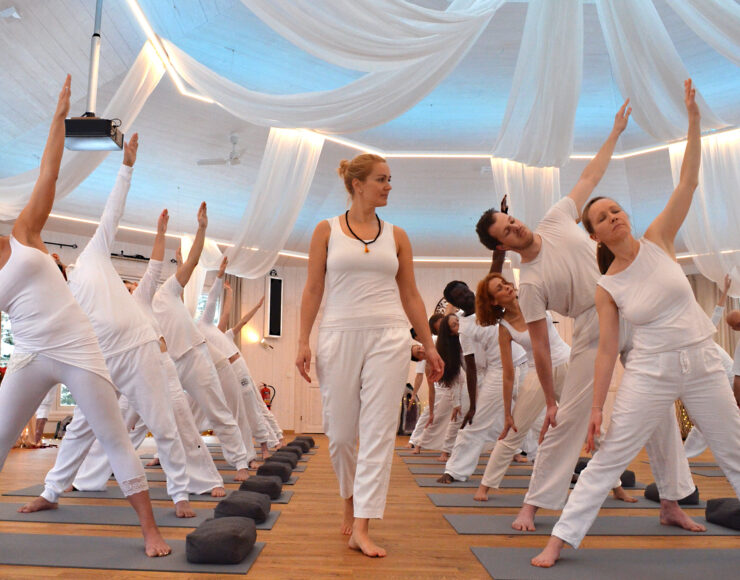
In this vulnerable state, Dorothea stumbled onto Tantra Yoga. She chose her first course, the Taste of Tantra, by simple logic: it was affordable, it fit her schedule, and it was online and easily accessible. Full of doubt, but grasping at hope, she gave it a chance.
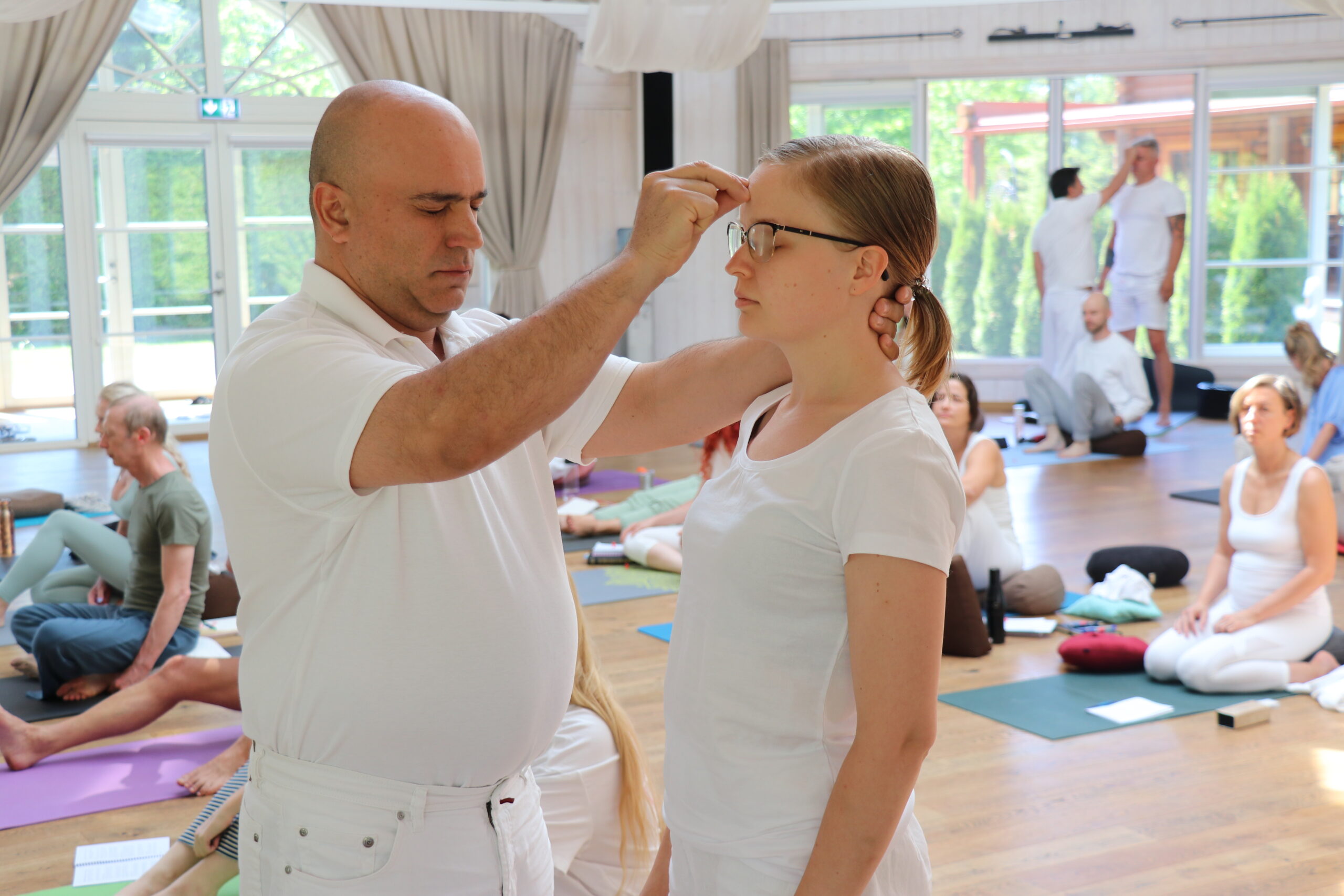
From the very beginning, she sensed a new possibility. “It was just like this door opened wide,” Dorothea recalls. She was drawn to Somananda Tantra School’s practical and methodical teachings. “Nothing is set in stone. Nothing is chronic. You don’t have to accept anything,” she learned.
These words deeply resonated with her inner problem-solver. The idea that her physical condition was not a permanent sentence but a solvable problem was revolutionary. Life was no longer something that just happened to her, it was something she could actively shape.
Dorothea continued to take courses with Somananda Tantra School, and dove into regular practice of yoga asanas and meditation. Her committed practice started to pay off as she began to experience increased physical mobility, energy levels, emotional balance, and emotional stability.
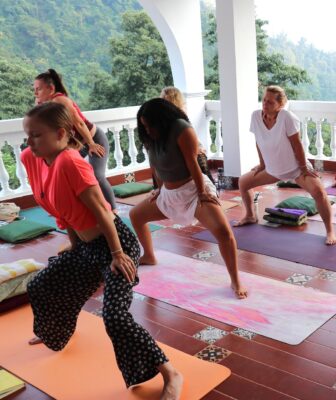
A major turning point came in 2022, when, with the support of her family at home, she was able to attend an in-person Tantra Massage Therapist Training course. She addressed not only her longstanding physical pain, but also her persistent sexual pain, as well as vaginal dryness that had started after childbirth.
During the Tantra Massage training, Dorothea also realized that she was completely numb internally, which surprised her. However, as she continued her yogic practices, her body gradually responded.
“My cervix started moving… something shifted,” she recalls. Progress was steady but real. Now, nearly three years later, the results are concrete. “I’m not fully sensitized yet, but I’m not in pain and I’m moist and all of these things that women should be.”
The idea that her physical condition was not a permanent sentence but a solvable problem was revolutionary. Life was no longer something that just happened to her, it was something she could actively shape.
Building Physical and Emotional Strength with Tantra Yoga
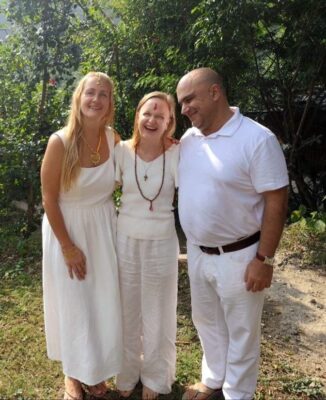
Dorothea’s dedication to Tantra Yoga sparked a profound transformation through every aspect of her life. The woman who had once been sick more often than not, and whose body felt perpetually “broken,” found new strength and vitality.
After just a few years of regular practice, her health improved so noticeably that a teacher, seeing her after seven months apart, exclaimed, “Wow, you have a new body!” Dorothea has remained committed to her practice and has completed Tantra Yoga Level 9, with the intention of completing all 24 levels of Tantra Yoga.
Her courage grew, too. When she traveled to India for a retreat — even losing her job in the process — Dorothea soon landed a new, better position, bringing more freedom and a higher salary.
The inner healing she experienced also brought much greater emotional balance. Her emotions became more stable, and she felt like she finally had control over them, rather than her emotions controlling her. She learned that emotions are related to the second chakra (Svadhisthana), so this was an important area to focus on in her yogic practice.
Perhaps most importantly, the tools of Tantra Yoga gave her a foundation of self-awareness and confidence she’d never known. “I didn’t trust myself, I didn’t listen to myself,” she says of her past. “I’m getting to a point now where it’s like if I just feel into my body, I know what the right thing is.”
Watch the video below to hear Dorothea share her experience after completing the Tantra Rituals retreat in Estonia.
When Logic Alone Isn’t Enough: Yan’s Story
Yan, a 57-year-old medical device engineer from the USA, had all the marks of success — a 30-year marriage, three children, and a stable career. But as his marriage crumbled, Yan was forced to look beyond his roles and confront a startling emptiness inside.

“I realized I really didn’t know much about who I am and what I want,” Yan recalls. “I was pretty much an empty, empty shell… not the roles I was playing as a husband, a father, or an employee. When I looked closer, I didn’t find very much there.”
The emotional fallout was intense. True to his analytical nature, Yan’s mind raced, trying to make sense of the pain and patch together solutions. But logic alone couldn’t resolve his heartbreak. Feeling flat, depleted, and lost, he reached a standstill — both mentally and physically.
Yan describes a memory that brought the point home: “I knew I had no fire left. It was completely gone. I had no energy, no drive, no desire for anything. And no ability to get out of the hole.” It was so tangible that on one mountain trip, he lay by an actual fire all night just to feel its warmth and remember a sense of vitality.
Searching for a way out, Yan discovered Tantra Yoga. He was cautious at first, particularly of the “strange tantra stuff” he had seen that seemed hyper-sexualized and overly sensational. Instead, he gravitated toward the structured, grounded teachings of true Tantra Yoga with the Somananda school.
Tantra Yoga — A Practical Science for Emotional Healing
What Yan found surprised him. Tantra Yoga didn’t demand belief — instead, it offered a practical science of energy. “As an engineer, I love the idea of energy, and I could wrap my head around where it comes from, how it helps, and how it works in the body and mind,” Yan says. “It gave me a lot of tools to try to figure out what I was feeling.”
He soon recognized that his “no fire” wasn’t just a poetic metaphor. It was an imbalance in his navel chakra — an energy center linked to drive and personal power. With this framework, he could finally take targeted action rather than floundering in abstraction.
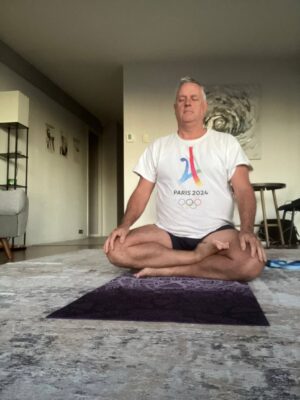
Sometimes that meant simple, physical rituals. “As silly as it is, dancing by the fire gave me that strength,” Yan admits. “Trying to balance and recharge that area took a long time, but it really helped.” He learned to spot other energy imbalances and deepened his practice to address them.
Yan’s methodical mind found particular satisfaction in the self-inquiry inspired by Tantra Yoga’s basics: “Who am I? Why am I here? What do I want?” He approached these not as vague musings, but as problems to solve and refine.
He would journal his answers through seven cycles of meditation and reflection. “I write them down, meditate, practice, then come back again, getting deeper and deeper.”
This disciplined approach paid off. Yan didn’t just find comfort — he rebuilt his sense of identity from scratch. He stopped seeing himself as a failed husband and began to experience himself as a being of energy, part of something larger and divine. The emotional healing was slow but certain.
Yan didn’t just find comfort — he rebuilt his sense of identity from scratch. He stopped seeing himself as a failed husband and began to experience himself as a being of energy, part of something larger and divine.
Life Unlocked: The Ripple Effects of Real Healing
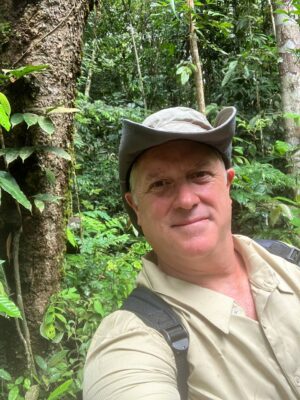
As Yan worked on himself, practical results began to surface. For three years, he’d searched without much luck for a new job, feeling, as Yan put it, “not in an emotional place to be successful.”
But as he found inner stability through Tantra Yoga, his life shifted dramatically. In the very week he and his wife finalized their separation, everything opened up. He lost his stagnant job, received new offers, and started a fresh chapter — all within days.
Yan feels he couldn’t have made this transition so easily without Tantra Yoga. He explains, “Through yoga, I’m finding what I need. I don’t need external substances or quick fixes. Tantra Yoga feels like a solid foundation.” Currently, Yan has completed Tantra Yoga Level 4, and plans to continue developing his practice.
Yan’s journey reveals that you don’t have to suspend your skepticism or abandon logic to find profound change in Tantra Yoga. The work is practical, the results are real, and the path is accessible even — and especially — to the rational mind.
The Skeptic’s Guide to Exploring Tantra Yoga
Yan and Dorothea’s stories demonstrate that Tantra Yoga can be a profoundly logical and effective system for personal transformation. If you come from a similar background of skepticism, but are facing challenges that logic alone can’t solve, here are a few practical tips to start exploring this path.
1. Approach it as a Personal Experiment
You don’t need to “believe” in anything to start. Approach it like a scientific inquiry. Your body, your mind, and your emotions are the laboratory. The techniques — the asanas, the breathing exercises, the meditations — are the experiment.
The hypothesis is simple: “If I apply these methods consistently, will I observe a measurable change?” Keep a journal. Note your energy levels, your sleep quality, your emotional reactions, and your physical state. Let the data you collect be your guide.
2. Start with the Tangible
Many people are put off by abstract spiritual goals. Instead, focus on a concrete, physical problem. Like Yan, you might focus on low energy or “no fire.” Like Dorothea, it could be chronic pain or frequent illness.
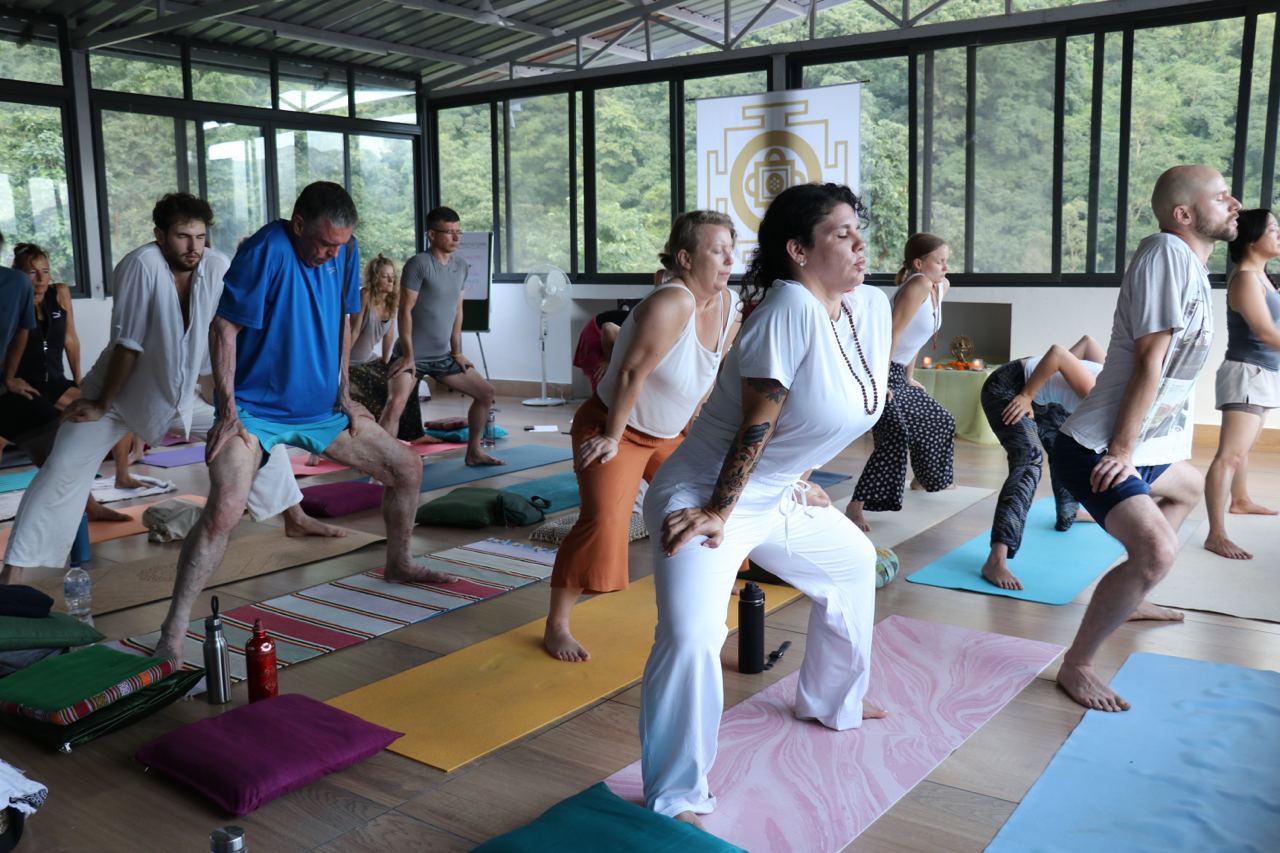
Use the yoga practice as a tool specifically designed to address that issue. When you experience a tangible result — less pain, more energy, better sleep — your own direct experience becomes the proof. This establishes a foundation of trust in the system based on evidence, rather than blind faith.
3. Seek Authentic, Structured Teachings
As Yan discovered, not all “tantra” is the same. Look for schools and teachers that emphasize authentic, traditional knowledge over sensationalism and New Age fluff.
A good system will be structured, logical, and be able to explain the “why” behind the techniques, much like an engineering manual. The clarity and depth of teachings are often a good indicator of their authenticity.
4. Value Practice Over Philosophy
While the philosophy is deep, the real transformation in Tantra Yoga happens through practice. It’s an embodied path. You can read a hundred books about energy, but you will only understand it when you feel it moving in your own body.
Commit to a short, regular practice. Even 20-30 minutes a day is more powerful than hours of intellectual study. The goal is to move the knowledge from your head into your cells.
You can start with this free online Tantra Yoga class, guided by our senior teacher, Liisa Maimon.
5. Listen to Your Inner “Truth-Meter” in the Healing Process
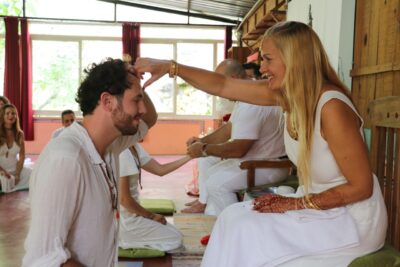
Both Yan and Dorothea, despite their skepticism, had an inner sense of what was “real.” Dorothea called it her ability to “tell when it’s real.” This isn’t a mystical power; it’s a deep-seated intuition that recognizes authenticity and integrity.
As you explore, pay attention to that feeling. Do the teachings make sense on a fundamental level? Do the teachers embody what they teach? Trust that inner compass.
Top 3 Yoga Poses for Emotional Healing
Discover three transformative Yoga poses designed to help bring balance to your emotions. These practices can ease emotional struggles and support your personal healing process.
Note: Never push into pain while practicing Tantra Yoga. If you feel any pain, stop and opt for a variation that suits your body. Work within your own limits and be gentle with yourself.
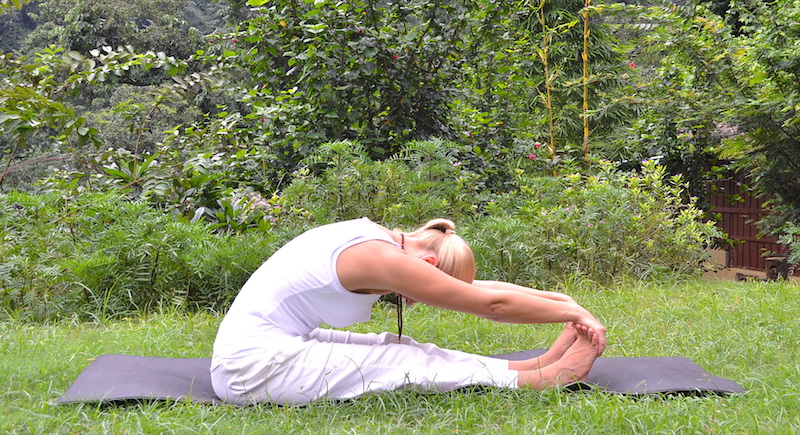
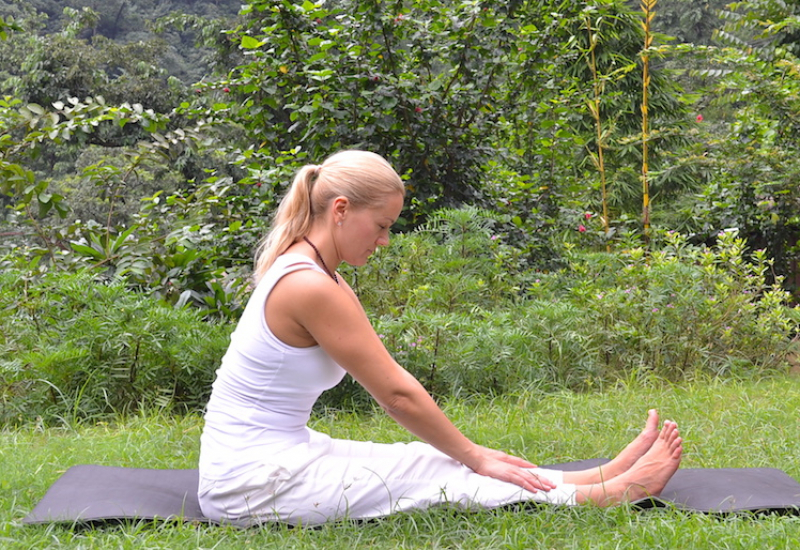
1. Paschimottanasana (Seated Forward Bend)
Accessible to all levels, Paschimottanasana calms the mind and helps emotional regulation. This pose encourages grounding and mental steadiness, which can ease anxiety, agitation, and mood swings.
How to Practice:
- Sit on the floor with your legs outstretched and straight. Inhale to lengthen your spine, then exhale and hinge forward at the hips, letting your hands rest on your legs or feet.
- Relax your back and allow your head to drop gently. Keep your knees straight for optimal energy flow.
- Close your eyes and focus on your root chakra (located between the anus and testicles for men and the entrance of the vagina for women) to anchor your attention. Try to perceive earthly energies activating and arousing the root chakra. If your mind strays from the point of concentration, gently bring it back. You may feel subtle vibrations in the area of the root chakra.
- Hold for 2–5 minutes as a beginner, gradually increasing up to 15–20 minutes over time. The longer you hold the position, the greater the effects and the stronger the energy circulation.
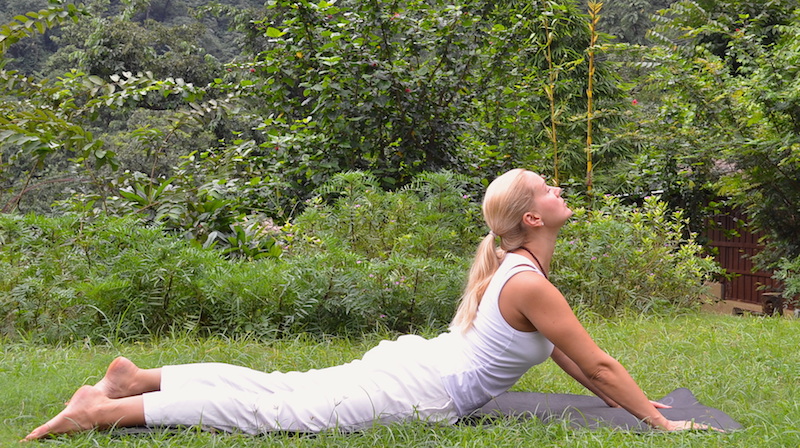
2. Bhujangasana (Cobra Pose)
Bhujangasana opens the heart chakra to help transform heavy emotions like anger, hate, or sadness into compassion, patience, and joy. It supports emotional balance and emotional control. When practising this pose for a prolonged time, one can experience pure emotions such as universal love, contentment, gratitude, and forgiveness.
Cobra Pose requires some spinal flexibility to perform in its fullest expression. However, there are variations shown below, making it accessible to most.
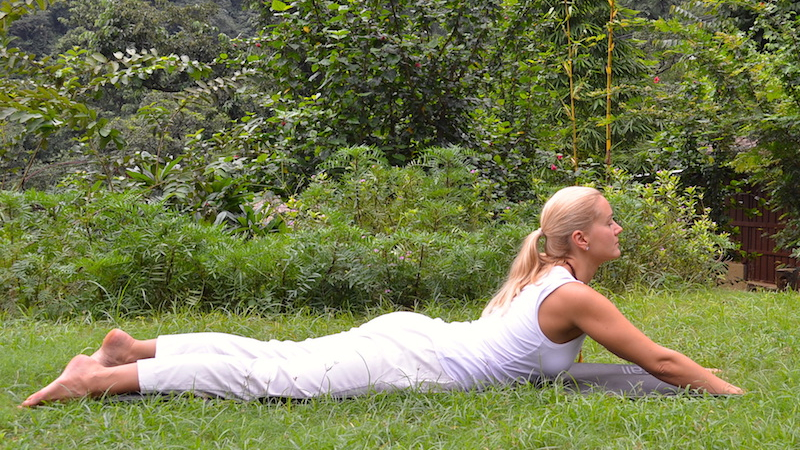
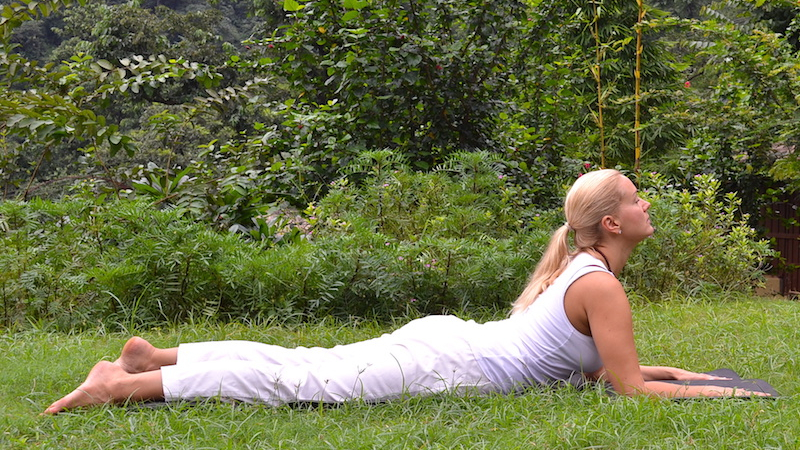
How to Practice:
- Lie on your stomach, place your palms under your shoulders, and gently lift your chest by straightening your arms. If this is uncomfortable on the lower back, simply walk the hands forward, decreasing the degree of extension in the spine (variation 1 of Bhujangasana). Alternatively, you may try the sphinx variation for comfort (variation 2 of Bhujangasana).
- Close your eyes and focus on your heart chakra. If your thoughts wander, gently refocus your attention back to the heart.
- Start with 1–2 minutes, building up to 5–10 minutes. The longer you hold the position, the greater the effects and the stronger the energy circulation.
3. Sarvangasana (Shoulder Stand)
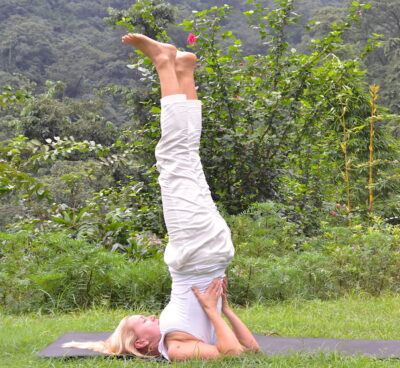
Shoulder Stand pose, referenced as one of the top 5 most powerful asanas, generates energy sublimation through an inverted body position. Sublimation is an alchemical process whereby energy from the lower chakras of our being is raised to the higher chakras – specifically the throat chakra in this asana.
Sarvangasana is a transformative, energizing pose that directs emotional energy upward in order to help lift negativity, fatigue, and hopelessness. It’s an effective type of yoga for emotional release.
How to Practice:
- Lie on your back, then lift your legs and support your lower back with your hands, forming a straight line with your body. Keep your legs slightly apart in order to observe the polarity of energy.
- If being in a fully vertical position is not possible, allow the legs to come down slightly and rest at a slight angle (a variation of Sarvangasana). Alternatively, use a wall or pillows if needed for support.
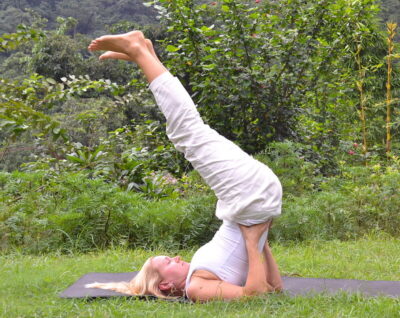
- Close your eyes and focus on your throat chakra.
- Begin with 1 minute and gradually increase to 5–10 minutes as you grow comfortable. The longer you hold the position, the greater the energetic effect.
While performing the above recommended Yoga poses, try your best to be still. Concentrate your mind, focus your attention, and achieve a meditative state.
These three poses can uplift and harmonize your emotional state, offering practical tools for emotional healing through Yoga. Commit to a designated amount of practice daily, and you will feel the effects and see results.
The Truth Behind Tantra Yoga
The rational mind is a powerful tool, but it is not the only tool we have. By integrating the methodical inquiry of the skeptic with the embodied wisdom of Tantra Yoga, we can unlock a path to healing that is not only effective but also deeply, personally true.
Yan and Dorothea’s journeys are a testament to the fact that you don’t have to abandon logic to find your soul. Sometimes, it’s the most rational path of all.
Liisa Maimon
Founder and Senior Teacher
Liisa Maimon, a spiritual teacher and yogini, is a founder and senior teacher at Somananda Tantra School, an international organization offering spiritual development through the ancient sciences of Tantra and Yoga.
Recommended Course

Tantra Yoga Level 1
True Tantra Starts Here